Showing posts with label Culture. Show all posts

Tuesday, January 21, 2014

Parada en Paysandú, Uruguay

article from July 23, 2012
by Julie R Butler

After driving for five days (at a leisurely pace) from San Rafael, Mendoza, to the Cataratas de Iguazú in the northeastern reaches of Argentina, then selling our car and riding the overnight bus to Colón to be dropped off on the side of a four-lane divided highway at the first light of dawn on a chilly Sunday morning, we took a taxi through the border crossing into Uruguay and on into the center of Paysandú, landing at the lovely Hotel El Jardín, where a warming fire, a fresh pot of coffee, and a serviceable staff made us feel comfortable and happy to be back to lil’ ol’ Uruguay once again.

The day was cloudy and gray and the mess of a big construction project on the main street of the city dampened the mood a little (they are installing fiber optics and putting all of the utilities under the sidewalks, which were greatly in need of repair, anyway). But after walking about and getting oriented, we found ourselves in a noisy pizza place that was full of soccer fans watching the World Cup qualifying match between Uruguay’s beloved team – known as La Celeste, the sky-blue color in the first flags of Uruguay and the team uniforms – and Peru. The pizza was great, plus we caught the dramatic, game-clinching goal and were a part of the thunderous celebration that it elicited. It was not a bad way to start things off.

Over the next few days, the weather brightened up as we explored the city. Happily, even though we didn’t know what exactly the Monument a Perpetuidad might entail, we wandered into this beautiful historic cemetery that features exquisite sculpture on par with what can be found in the famous Recoleta Cemetery in Buenos Aires except that this memorial garden is much less crowded and very tranquil. The remains of the scientists and philanthropists, the housewives, children, and common men “who forged the Paysandú of today” rest peacefully here, and their memories are honored with amazing marble artwork by Italian masters of the day.

The third-largest city in Uruguay, Paysandú is a commercial and industrial center as well as a tourist destination, with attractive beaches and plenty of open park space on the Uruguay River along with the nearby thermal springs. The city is known for the weeklong beer festival that is held during the Easter holidays (it’s officially called Semana Turismo in Uruguay) and its Carnival season celebrations.

Paysandú has rich historical significance for the Eastern Republic, having begun as an attempt at becoming one of the Jesuit missions (known as reducciones de indios) that were set up throughout the Río de la Plata Basin beginning in the seventeenth century. It was located at a cattle crossing of the Uruguay River and soon became established as a port known for its leatherworks and beef jerky plant. The jerky was once popular with the Portuguese as inexpensive sustenance for their African slaves, while the leather from Paysandú is still prized to this day. The wool fabrics produced here are also prized, and the other main industries are forestry products, citrus, cement, and beer. Paysandú is probably most famous within Uruguay for the heroic defense of its outnumbered inhabitants against Brazilian invaders in 1865 – a common theme in this tiny country.

We learned all kinds of interesting information in the modest history museum, and everywhere we went in the city, people were proud to point out the many historical buildings and monuments.

Photos by Jamie Douglas and Julie R Butler:


Julie R Butler is a writer, journalist, editor, and author of several books, including Nine Months in Uruguay and No Stranger To Strange Lands (click here for more info). She is a contributor to Speakout at Truthout.org, and her current blog is Connectively Speaking.
email: julierbutler [at] yahoo [dot] com, Twitter: @JulieRButler

Our Trip to Minas, Uruguay, Part Two

article from July 9, 2012
By Jamie Douglas

Minas, a charming town located in the sierras of Uruguay, has held an attraction for us for some time now, and we recently went there in search of housing for the near future – in vain, unfortunately.

Nevertheless, I highly recommend a visit to this small city in the “mountains” of Uruguay. There are various direct bus services from Montevideo, Piriápolis and Punta del Este. The ride is about one and a half hours from any of those places. If you are coming from the central or northern Atlantic coast, there is a shortcut by taking the bus to Pan de Azúcar and walking a block to the COOM “office,” a stale, rundown bar inhabited by strange creatures at all hours of the day. A bus leaves from there at noon. This bus schedule information website offers the details on most services available in the country in English.

So we took the ride from the stinking bar up to Minas, an incredibly clean town with 25,000 mostly friendly people and clean air that is surrounded by lovely rolling hillsides. The town itself features just about anything your heart might desire: well-stocked stores, restaurants and confiterías featuring world-class coffee and a great assortment of pastries, as well as several very nice hotels. Our favorite is the Posada Verdún, located at 715 Washington Beltran, just a couple of blocks from the bus station, in the heart of town. The posada features its own dining room, which serves world-class food at very affordable prices, and the chef’s pride is his bread. Judging by his waistline, he eats there, as well. All the rooms are well appointed and heated/air conditioned. We have been to this particular location several times, and they really do treat us like family. Their motto is “Su casa en Minas.”

Walking around town, we were constantly amazed at how clean everything was, how many smiling faces we encountered and, even late at night, how safe we felt. The little city just does not give off the aura of fear and crime that you encounter in so many other Latin American cities.

Another thing that was very pleasing to the eye was the architecture. With a couple of newer exceptions, all the buildings are no more than two stories, with many polychromatic fronts. The entranceways are tall and feature very ornate doors, most lacking iron grates.

The town features several well-groomed parks, the largest of which is right in the center of town, with a large statue of General Lavalleja sitting on his horse (with the occasional pigeon pooping on his chapeau). There are several vacation parks just outside of town, the best known of which is probably the Parque Salus, the source of the mineral water of the region as well as the local beer, Patricia, which recently got gobbled up by the Belgian multinational Ambev, then Inbev, the company that bought out Anheuser-Busch and Corona Modelo and is looking to become the world beer monopoly.

It is nevertheless a very nice excursion to go there. An ancient bus takes you the 10 kilometers from the Minas bus station to the nature park, where you will enjoy an abundance of eucalyptus and pine trees.

Other local attractions include the retreat village of Villa Serrana, 25 km northeast of Minas; Parque Artiguas, with its huge statue of the Uruguayan national hero, José Gervasio Artigas, on his horse; and many nature attractions in the surrounding mountains that offer outdoor activities such as fishing, camping and hiking.

Overall, Minas is a lovely destination for a few days or a weekend, but if you want to move there, there really is not much available in rentals. There are plenty of properties for sale, of course, whether you want to be in town or on the outskirts. So if you are in this neck of the woods, by all means, stop by in Minas and enjoy the easygoing town in the sierras, 500 feet above sea level, one of the higher places in Uruguay.

see also: Uruguay's "Secret": Minas and Our Trip to Minas, Uruguy: Part One

Jamie Douglas
About to be homeless (again) in Uruguay

[All photos by Jamie Douglas]

I encourage you to write me at cruzansailor [at] gmail [dot] com with any questions or suggestions you may have. Disclaimer: I am not in any travel-related business. My advice is based on my own experiences and is free of charge (Donations welcome). It is always my pleasure to act as a beneficial counselor to those who are seekers of the next adventure.

South America News Roundup May 11, 2012: Dignified Death in Argentina, Quinoa in the Andes, Floods in Paraguay, Water Cannons in Chile

article from May 11, 2012
by Julie R Butler

Argentina: Dignified death law

The Argentine Senate has approved a “dignified death” law by a vote of 55-0, with 17 abstentions. The law was already passed in the Lower House last year. It eliminates the need for family members to find a judge who would sign a court order to refuse treatment or put an end to life-support.

Medical ethicists assure that removing feeding tubes is more humane than force-feeding the dying because the human body naturally shuts down its systems and can even induce feelings of euphoria that make the passing more calm and comfortable. Euthanasia is expressly prohibited by the new law, and the patient or representative must have signed document stating their wishes before a notary and two witnesses.

The Andes: Quinoa exports soar

Quinoa, a grain-like member of the spinach family, has been grown for food in the Andean regions of Ecuador, Bolivia, Peru, and Colombia for thousands of years. It is high in protein and has an excellent amino acid profile and good amounts of calcium, iron, and phosphorous. Like many indigenous foods, it was once looked down upon as “Indian food,” fit only for the poorest of the poor. But now, it has become a profitable cash crop for Peru and Bolivia, with a growing market in industrialized nations.

While this is good news for the farmers of these countries, it also raises several concerns. Suitable land is scarce in regions of Bolivia, causing violence over land claims. Another issue is that all of this nutritious food will be exported, leaving none left for the poorest of the poor.

Paraguay: Widespread flooding

Devastating floods began to hit the Chaco region of western Paraguay in mid-April. Some areas could not even accommodate emergency helicopters because of a lack of dry land.

The Paraguayan Chaco is nicknamed “Infierno Verde” (Green Hell), due to its extreme weather. The heat in the summer is intense, and the agriculture in the region has been plagued by extended droughts in recent years.

Heavy rains there continued through the end of the month, causing the affected area to spread to the capital city of Asunción, the latest region to have been declared a “state of emergency” due to flooding along the banks of the Río Paraguay.

As of April 29, 1,000 people had to be evacuated in Asunción and about 500 in Concepción, 570 km from the capital, while some 70,000 have been displaced in the Chaco.

Chile: Piñera, polls, and police

Recent news out of Chile serves as the perfect follow-up to the point I made recently in my article about the "Red Diaper Baby."

First, there is the recent polling that has Piñera’s approval rating dipping lower than it has ever been since he became president of Chile in 2010. This, despite the healthy economy, as food and fuel prices have fallen over the past few weeks. Political scientist Jose Viacava says that Chileans want more than good economic indicators; they are pushing for deeper reform in the country’s political and economic model. At least the president can take solace in the fact that the Concertación, the center-left opposition party, fares even worse in the polls. Perhaps part of the reason for so much discontent is that the carabineros spent US$6.7 million on 10 new riot control vehicles equipped with water cannons, feeding directly into the point that education reform activist, Camila Vallejo, was making in her response, as reported by The New York Times, to Piñera’s comment that “nothing in life is free. Someone has to pay”:

“Obviously someone has to pay, but there’s no reason why it must be families financing between 80 and 100 percent of it.” Why not the state — through taxes on large corporations, the nationalization of resources, a reduction in financing for the military? When yet another march ended in violence, Vallejo and her fellow students collected hundreds of tear-gas shells and brought them to La Moneda. “Here are more than 50 million pesos worth of tear-gas bombs,” announced Vallejo, money, she said, that could have been spent on education. Students formed the shells into a peace sign on the plaza, and Vallejo crouched in the center. The resulting image was published all over the world.

Julie R Butler is a writer, journalist, editor, and author of several books, including Nine Months in Uruguay and No Stranger To Strange Lands (click here for more info). She is a contributor to Speakout at Truthout.org, and her current blog is Connectively Speaking.
email: julierbutler [at] yahoo [dot] com, Twitter: @JulieRButler

Rousseff Revolutions

article from January 28, 2012
by Julie R Butler

How is it, you may wonder, that Latin America is so progressive when it comes to having female heads of state – thirteen, so far, including several countries in the Caribbean – yet the machismo culture persists?

A recent article in Der Spiegel addressed this conundrum with a profile of Brazilian President Dilma Rousseff, labeling what she has been doing with her presidential power as nothing less than “Gender Revolution.”

Ms. Rousseff is no stranger to revolutionary activities, nor is she a stranger to the way women are treated in Brazil, as she used her formidable strengths and skills to navigate up through the patriarchal political system. And now that she has been the president of the world’s sixth-largest economy for over a year, she has not only successfully removed herself from the long shadow of her predecessor, Lula da Silva, but has achieved an approval rating that is higher than any previous president had ever managed one year into their terms.

President Rousseff has surrounded herself with women, with only one man in her inner circle of advisors, having wisely held on to the head of the presidential office who served Lula for eight years previously. Rousseff filled the positions of many undersecretaries, ministers, and experts with women, when given the choice between a man and a woman with the same qualifications. And she did not have to go fishing for them. According to Der Spiegel,

“Skilled women aren’t hard to find. Brazilian women stay in education longer and attend university in greater numbers than their male counterparts. Although the country has its fair share of machismo, the society itself has distinctly matriarchal characteristics. Men may call the shots out on the street, but women rule everywhere else.”

Women in Brazilian society are in charge where it really counts. They are the heads of the households, a fact recognized by the child benefit program Bolsa Família that rewards poor families for keeping their children in school, which preferentially gives the money to the woman of the house.

Meanwhile, women earn, on average, one-third less than their male counterparts in the working world. Political quotas that have stipulated that 30% of mayoral, gubernatorial, and parliamentary candidates in an election must be women have been ignored, with the politicians claiming that there are not enough qualified women. However, that excuse will probably no longer hold up, thanks to the example set by President Rousseff.

Ms. Rousseff has shown her dedication to her convictions by declining to host Iranian President Mahmoud Ahmedinejad on his recent Latin America tour. While Lula had welcomed the Iranian regime with open arms, Rousseff has been a critic of their treatment of women and shows less eagerness to engage with the Iranians at this delicate moment in history.

And another thing is changing in Brasília, the capital of the nation. With the women taking charge, the long-standing tradition of political corruption is no longer being tolerated. Rousseff has replaced six ministers who were involved in corruption scandals, which has helped her popularity in the polls.

Another help, I believe, was the release of this photograph of 22-year-old Dilma Rousseff being interrogated by the military regime that arrested, tortured, prosecuted, and sentenced her to 28 months in prison for her membership in the Marxist 8th of October Revolutionary Movement that resisted the dictatorship. It is a stunning image that shows the iron will of a young idealist in contrast to the cowardly men who are hiding their faces from the photographer in the background. One act that the group was famous for was the robbery of US$2.5 million from the safe of the notoriously corrupt ex-Governor of São Paulo Ademar de Barros, whose supporters were fond of the motto, “He steals, but he gets things done.”

President Rousseff seems to know how to get things done without stealing, and that is another Rousseff Revolution for Brazil.

[Image of Brazilian President Dilma Rousseff via Wikipedia]

Julie R Butler is a writer, journalist, editor, and author of several books, including Nine Months in Uruguay and No Stranger To Strange Lands (click here for more info). She is a contributor to Speakout at Truthout.org, and her current blog is Connectively Speaking.
email: julierbutler [at] yahoo [dot] com, Twitter: @JulieRButler

Less Than Eleven Months Until The End, My Friend

article from January 26, 2012
By Jamie Douglas

...And everyone wants to get in on it.

As most Westerners know, your pets don’t have a soul, so they will not be able to accompany you in the coming Rapture on December 21, 2012. I have already offered to be a refuge for all those pets left behind, in exchange for believers leaving me all their worldly goods. (See the PayPal “Donate” button on this page!)

The government of Mexico has announced plans to take advantage of the so-called Mayan Prophecy to bring hordes of tourists on a Doomsday vacation of a lifetime to all the Mayan sites. In spite of the denial of the elders of the current Mayan people that the date carries such significance, those living in the affected areas fear that Doomsday tourism could contaminate their sacred sites by thousands of tourists with their digital cameras at the ready, time-and-date stamp and all.

Artemio Kaamal, general coordinator of Kuxa’ano’on, which is Mayan for “we live,” stated that the government failed completely to consult with the indigenous peoples of the region. Mexican President Felipe Calderón has allocated US$49 million to promote the Maya World Program, which it is hoped will lure some 52 million tourists to the Mesoamerican region. Of course, all the other prophecies proclaiming the coming Apocalipsii have come and gone, with the various prophets having returned to obscurity. Remember the good Revered Camping? He predicted The End with absolute certainty, not once but twice – talk about stamina for a 90-year-old man!

The simple fact is that on December 21, 2012, a cycle of 144,000 days in the Mayan calendar will end, and another will begin. The current cycle started August 11, 3114 BC, about 1,300 years before the advent of the Mayans.

The believers in this end-of-the-world scenario would be just as justified in proclaiming the end of the world at the end of the year, decade, century or millennium. Remember the year 2000, when thousands sold or gave away all their worldly goods? Or the millennium computer bug that was going to make airplanes fall out of the sky? Well, we are still here as a species, and once again, I urge you to click on the “Donate” button to send me whatever you can spare, so that we may go around taking care of all the soulless pets that will be left behind.

Jamie Douglas
San Rafael, Mendoza

[Image of Pyramid of Kukulcán, Chichen Itza, Mexico via Wikipedia]

I encourage you to write me at cruzansailor [at] gmail [dot] com with any questions or suggestions you may have. Disclaimer: I am not in any travel-related business. My advice is based on my own experiences and is free of charge (Donations welcome). It is always my pleasure to act as a beneficial counselor to those who are seekers of the next adventure.

Experience the Finest of Mendoza

article from January 22, 2012
by Julie R Butler

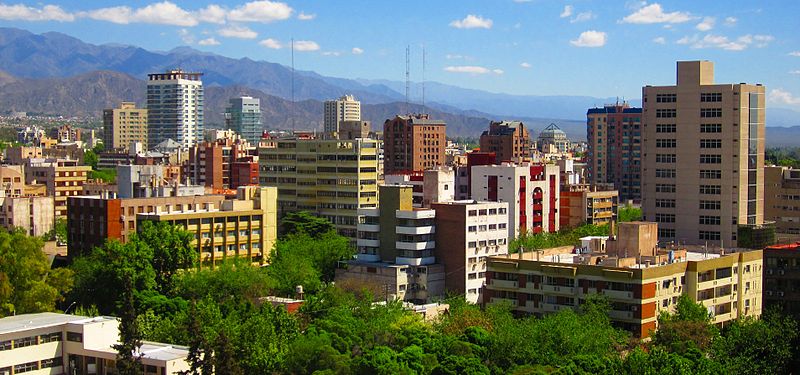
The city of Mendoza, Argentina, is many things: a leafy desert oasis, an important agricultural center, a travel hub, a cultural gem, a wine connoisseur’s paradise, and a base camp for outdoor adventures in the high Andes, to name a few of those things. While the name Mendoza is probably most closely associated with wine, there is something for everyone in this provincial capital.

Mendoza is among the top most-visited cities in the country, along with Buenos Aires and Córdoba, with its wide, tree-lined avenues and relaxing, shade-filled parks being a welcome respite from the crush of humanity in those two megalopolises. The setting is nothing less than spectacular, with the Cordón del Plata towering from the west, behind which looms the highest peak outside of the Himalayas, Cerro Acongagua.

Some who fly into Mendoza might find it hard to believe that they are in a semi-desert climate because of the agreeable greenery and the gurgling fountains. And flying into Mendoza from international destinations via Lima, Peru or Santiago, Chile can be advantageous because the hefty reciprocity fee that is charged to US, Canadian, and Australian passport holders at both of the airports that serve Buenos Aires is not charged here (if you book your bags through at Santiago, you will not be charged the fee in Chile, either). From here, the closest major destination is Santiago, a nine-hour bus trip (allowing two-hours for the border crossing); while within the country, Córdoba is ten hours to the north by bus. So you might as well stick around for a while before heading off again.

Wine tours are what Mendoza is famous for throughout the world. Traditional bodegas (the word used in Argentina for wineries), can be found in nearby Luján and Maipú. Tours range from do-it-yourself bicycle tours that will include a wine tasting, as long as you show genuine interest in making a purchase, to personalized private tours that include gourmet meals. One and a half hours to the southwest is the Valle de Uco, where you will find many innovative, foreign-owned wineries that are moving beyond the famous Malbecs and other wines that are enjoyed by the Argentines, producing world-class blends with a growing number of grape varieties that are new to the region.

If art and culture are your passions, then Mendoza has much to offer. Visits to art and historical museums will be interspersed with pleasant strolls through the beautiful city center with its many plazas (where you are likely to find artists with their easels, capturing the ambiance for posterity); lingering coffee breaks at the numerous cafés (where the people-watching is superb, as long as it is not siesta time); shopping excursions for leather goods or wine (great bargains are to be had); and delicious meals that range from traditional Argentine beef barbecues to modern cuisines (mmmm!).

Then there is the natural splendor of the Andes Mountains to explore. Activities include everything from day hikes to serious mountaineering excursions, rafting to paragliding, fly-fishing to horseback riding, and anything else that you can image the Western Hemisphere’s highest mountains to offer.

All that activity calls for a spa treatment! Termas de Chachueta comprises a network of hot springs that are located just an hour away from the city. The full luxury treatment includes masseuses, Jacuzzis, and more, with a buffet lunch, to boot. Or, you can simply soak in the warm healing waters in a relaxing natural setting.

Back to the city: You will find it to be bustling in the morning and very quiet during the hot afternoon hours of siesta, springing back to life for the evening and into the nighttime, when the youth come out to see and be seen. The dinner hours begin at 8 pm, theater or music shows do not begin until after 10 pm, and the bars and dance clubs are empty until about 1 am, with the party going on into the wee hours.

In order to experience the best of Mendoza, I recommend Posada de Rosas Garden Apartments. My husband and I visited the posada recently and had the chance to sit down and talk to the proprietors, Ellen and Riccardo, over coffee and croissants.

A tour of the grounds revealed three elegant studio apartments, each opening onto a captivating courtyard that includes a lush garden, a romantic terrace, a grape arbor, a very inviting swimming pool, and of course, a parilla, or Argentine barbecue. During the heat of the day, the earthy colors in the sitting area in the residential home at the front of the property was the perfect setting for our little gathering, from where the play of bright sunlight off the patio just outside created the peaceful ambiance of a quiet oasis in the middle of a bustling city.

During out chat, I was even more impressed with the character of Ellen and Riccardo, finding them not only to be very interesting people, but also very professional, very attuned to what travelers need, very informed about the region, very attentive to every little detail, and wonderful hosts. They operate Amazing Mendoza Tours, a highly regarded tour company that offers different kinds of excursions and tours, including cooking classes, visits to artists’ studios, and much more. They very successfully take advantage of the knowledge and skills of a professional travel writer and an artist, with both of them being experienced travelers, themselves.

And if all of that were not enough, well, you know what they say about location (location, location). Posada de Rosas is within easy walking distance of Mendoza’s main square, Plaza Independencia, in one direction and Parque General San Martín, the 420-hectare park that is considered to be one of Mendoza’s highlights in the other direction, as well as the vibrant nightlife center of “Aristedes.”

So when you come to Mendoza, be sure to make bookings and purchase travel tickets well in advance, particularly if it is during the high season, December to March.

[Image of Mendoza via Wikipedia]

Julie R Butler is a writer, journalist, editor, and author of several books, including Nine Months in Uruguay and No Stranger To Strange Lands (click here for more info). She is a contributor to Speakout at Truthout.org, and her current blog is Connectively Speaking.
email: julierbutler [at] yahoo [dot] com, Twitter: @JulieRButler

You Know You’re Not in Kansas Anymore When...

article from December 13, 2011
by Julie R Butler

Everything is different in Latin America. It seems like this statement would be glaringly obvious, yet it is not so obvious to those who are picking a future retirement location out of the glossy magazines that are more about selling a dream than about culturally educating their readers. Building construction is different. The smells are different. People eat strange meals at odd hours of the day. Businesses close for several hours during the middle of the day. Life passes by according to an entirely different time schedule (or none at all). And people behave differently.

My theory is that the reasons for these differences are sunk deep in history, in the turbulent interaction of cultures that reaches back hundreds of years farther than the history of the United States does and involves epic conquests of a sophisticated matrix of civilizations that were not a part of the story in the northern reaches of the Americas. The result is that, throughout Latin America, there are several characteristics that many who come to live here are surprised to discover, often finding themselves annoyed and offended to have to deal with them. Here are a few:

The future

Time is not the essence of Latin America. It is regarded in a completely different way. When someone says that something will happen “mañana,” they do not necessarily mean “the day that follows today.” It is a multipurpose word, like “aloha” in Hawaiian. It may mean “tomorrow,” but it may also mean “morning,” and you have to specify “mañana por la mañana” if you want to say “tomorrow morning.” Most often, it means “not today, but sometime in the future.”

Likewise, “quince días,” which translates literally into “fifteen days,” may signify roughly two weeks from now, but usually it means sometime further into the future or “check back in a few weeks.”

A desire to please

It seems to be a matter of politeness to answer “sí” when presented with a yes or no question, regardless of what the answer really is. Example: “Does this road go through?” “Sí.” One hour later, you will enjoy waving at everyone for the second time as you make your way back from where the road ends at the edge of a major river – sans bridge. Asking “Is this the way to San Gerardo” is not the best method of finding your way to San Gerardo. Alternatively, asking for directions will get you directions to somewhere or other, but not necessarily to San Gerardo. Since you wanted directions, you will get directions.

If you ask if something can be done, again, the question is likely to be answered in the affirmative. And you can probably guess what “I’ll call you” usually entails. I believe it is all due to the strange custom that it is better to disappoint someone in the future than to do it face to face. The future is so uncertain, after all.

Personal space?

Ideas about “personal space” are different, as in there is no such concept in many places in Latin America. People will crowd you in lines and at the gym.

Another aspect of this is the way that you will find people gathered together or walking together at a leisurely pace blocking everything from the grocery store aisles to the roads, and whatever important appointment you are rushing to will just have to wait.

And then there is noise. One person’s noise is everyone’s noise. If it is a major holiday, there will be mortars and firecrackers. If it is a wedding or a birthday, there will be loud music and laughter. If you are in the countryside, it will be barking dogs and crowing roosters. If you are in the city, there will be car horns honking. You will either get used to it or you won’t.

Customer service?

I often read about how there is no such thing as customer service in Latin America, but I think this impression is not quite right. I believe that the issue is that ideas about courtesy are different.

As I mentioned before, people prefer to answer questions in the affirmative and tend to say that things are possible when they are not. Businesses owners who are out of stock of an item will tell you that they will be getting more in “quince días,” but knowing that the distribution system is not that reliable should tell you that it will either arrive sometime in the future or it won’t. You may think you have an item on hold, even having put a down payment on it, but if someone walks in with the cash on hand to purchase it, you will have to make other arrangements.

There is no “business as usual,” as people from the States and other more fast-paced and prompt countries are familiar with. But do not think that what these shopkeepers and businesspeople are doing is meant to be rude or spiteful. They are just different cultural habits.

The same goes for waiters at restaurants. Instead of constantly sweeping by to see if you would like yet another beer, the waiters in Latin America generally take a hands-off approach. I have come to suspect that they are specially trained in eye contact avoidance, as you often have to gesture wildly to get their attention. Most incomprehensible is the matter of the check. They are not interested in turning tables over. The system doesn’t work that way. Rather, diners are expected to linger and talk over a cup of coffee after the meal is finished. There is a time for everything, but mealtime is not the time for rushing. That activity is reserved for speeding from one stoplight to the next.

My humble advice

It is easy to get paranoid when you are learning to live your life in a foreign culture, when you think that everyone is out to take advantage of you. And there are, indeed, many who will charge the “gringo tax” or otherwise try to take advantage of those who don’t speak the language or appear to be able to afford it or seem to be out of their element – all because they can.

My advice: Always be respectful. Do your best to learn the language and use it at least when greeting people before politely excusing yourself for not speaking their language well.

Be observant of how the locals behave. Particularly if you are outside of a big city, don’t be shy about greeting whoever you meet, even just walking down the sidewalk, if that is what others tend to do. In the major cities, you will find people to be more guarded. Then again, you may find yourself in a café or restaurant where people are on more friendly terms with each other. Join in the spirit – you might end up engaged in a pleasant conversation with the people at the next table who are interested to know if you are enjoying your time in their country.

Above all, try not to take things personally. The disregard for time, the blowing you off, the noisy neighbors, the inattentive waiters, even the gringo tax and the attempts to take advantage of your naivety about the ways of their country... none of this is aimed at you personally. Some of these habits are cultural mindsets that you will just have to get used to, otherwise you will be perpetually bent out of shape. And in most cases, the tendency to try to take advantage is a trait that is extended to anyone whose vulnerabilities make for an opportunity. I guess it is kind of like asking for a discount on the price of something; if you don’t ask, you won’t get it.

Life is different on the other side of the rainbow. It certainly isn’t Kansas anymore.

[Photo of Rainbow at Iguazu Falls by Julie R Butler]

Julie R Butler is a writer, journalist, editor, and author of several books, including Nine Months in Uruguay and No Stranger To Strange Lands (click here for more info). She is a contributor to Speakout at Truthout.org, and her current blog is Connectively Speaking.
email: julierbutler [at] yahoo [dot] com, Twitter: @JulieRButler

Barrios (Neighborhoods) of Montevideo

article from December 1, 2011
by Julie R Butler

Montevideo’s history began in 1723, when the Portuguese began to build a fort overlooking Montevideo Bay. But the Spanish would have none of it, sending an expedition from across the Río de la Plata just one month after the project had begun to drive the Portuguese away and settle the area themselves. The port came to rival Buenos Aires, and in 1776, Montevideo became Spain’s main naval base for the South Atlantic.

After fighting for independence from Spain, then fighting for independence from the Junta Grande of Buenos Aires, and then fighting for independence from the Empire of Brazil, Montevideo became the capital of the Eastern Republic of Uruguay in 1828. The fortified walls of the Old City were torn down and the New City was expanded into the barrio (neighborhood) now known as Centro. The going was slow, due to the civil war, during which Montevideo was under siege for eight years. It wasn’t until about 1853 when Montevideo finally began to flourish and grow, with the inauguration of the lovely Teatro Solís, after 15 years of construction, representing the hopes and dreams of this promising time.

The neighborhoods of Barrio Sur and Paloma became the home of many Afro-Uruguayans who were freed from slavery, evolving into an important cultural center for Carnival traditions such as Candombe rhythm and the musical theater of Murga, as well as Uruguayan Tango and other unique cultural treasures.

Aguada and Cordón were among the next barrios to be annexed to the New City. Although this region is filled with beautiful and amazing historical edifices, perhaps the most amazing institution is the colorful Sunday market on calle Tristán Narvaja, established in Cordón in 1870.

Beginning in second half of the 19th century and into the early 20th, Montevideo experienced a tremendous population boom of Europeans immigrants mainly from Spain and Italy but also many Central Europeans, and the city grew by leaps and bounds. New neighborhoods were added, large open spaces such as the Rodó, Prado, and Batlle parks, along with the Estadio Gran Parque Central and the Rambla running along the entire waterfront of Montevideo, were wisely engineered by city planners, greatly enhancing the outdoor environment of the city.

The growth spurt lasted through the two world wars, until stagnation hit in the 1950s, which lead to social problems and the dictatorship that lasted until 1985. The city was sadly neglected during this time; but after democracy was restored, the Uruguayans got to the task of rebuilding their beloved city.

Today, the rejuvenated Montevideo is a city of cafés and restaurants, artisans and antique dealers selling their wares at outdoor markets, fishermen and strollers enjoying an afternoon along the Rambla. The charming Old City and the neighborhoods around it continue to serve as the beating heart of the nation. Bohemian neighborhoods surround bustling universities, while mixed resident and shopping areas that stretch along the waterfront in popular locations such as Pocitos and Punta Carretas along with the more upscale Buceo and Carrasco barrios have a Mediterranean feel.

Throughout the city, the bus system is efficient and easy to use, nothing is all that far away, and the rate of hustle in Montevideo’s bustle is refreshingly laid-back.

[Photo by Jamie Douglas]

Julie R Butler is a writer, journalist, editor, and author of several books, including Nine Months in Uruguay and No Stranger To Strange Lands (click here for more info). She is a contributor to Speakout at Truthout.org, and her current blog is Connectively Speaking.
email: julierbutler [at] yahoo [dot] com, Twitter: @JulieRButler

Latin America News Roundup Nov 30, 2011: Argentina, Colombia, Cuba

article from November 30, 2011
By Jamie Douglas

Argentinean Holidays

Being a worker in Argentina in 2012 certainly has its benefits. Out of the 366 days next year, 122 will be official holidays and weekends, precisely one third of the whole year, assuming that the end of the world will not surprise us all. There will be a total of 10 fin de semanas largas, or 3-day weekends, with the possibility of an eleventh one to celebrate the bicentennial of the Argentinean flag on Monday, Feb 17. That last one is pending approval of a bill in the lower house, after the Senate approved it already.

Add to that the vacation days that are written into the law, and the average worker productivity will be down, forcing manufacturers to hire more workers, something that is great for the economy, driving down unemployment and raising income tax receipts. Oh, sorry, I almost forgot! It doesn’t work that way. Few people actually pay taxes, and employers will probably just force their workers to be more productive. Have another mate, mate, and then get back to work.

Venezuela-Colombian cooperation on drug kingpin capture

The short and violent criminal career of Colombian bad boy Maximiliano Bonilla-Orozco has come to its inevitable conclusion. No, he is not dead, but he has just been apprehended in Venezuela’s third-largest city, Valencia. Bonilla-Orozco has been on the US’ list of most wanted drug kingpins for a while. It is alleged that he was the mastermind behind sending several hundred tons of cocaine from Colombia to the US and sending millions of dollars back through Mexico.

Perhaps not so coincidentally, the capture was made on Sunday while Colombian President Juan Manuel Santos was on a state visit to that very country. Santos thanked his Venezuelan counterpart, President Hugo Chávez, for his country’s invaluable assistance in the capture of the very high-value drug trafficker who has wrought so much damage in many parts of the Americas.

The captured narco received his drugs from the Ejercito de Liberacion Nacional (ELN) and has had extensive dealings with the Zetas, the ultraviolent Mexican gang of former military commandos. The US had a $5 million reward out for his capture, but Venezuelan officials announced that they will not claim the reward, stating that he will be extradited to the US as soon as the yanquis are ready for him. Bonilla–Orozco was indicted in New York in 2008. This comes as somewhat of a surprise to US officials, as Venezuela discontinued its anti-drug cooperation with the US in 2009.

Cuba’s privatization moves

Raúl Castro keeps surprising not just seasoned Cuba watchers, but also his long-oppressed compatriots. It is looking like the Pearl of the Caribbean will slowly get back to private ownership of businesses, automobiles and property. With the latest announcements coming from Castro, the road ahead for private enterprise looks promising. After over 50 years of the island’s Soviet-style central planning and execution, the president of the island nation has come to the logical conclusion that even at the very low salaries paid to state workers, having millions of underperforming but unfireable workers on the state payroll is a drain on the already-strained economy. President Raúl is encouraging the formation of small businesses, hoping they will hire as many as one million workers away from government payrolls.

While his ultimate goal is to strengthen Cuba’s communism with these changes, it appears more like the grassroots of a new socio-capitalistic society that, once it takes hold, will become the base for future economic development. Enterprising minds in the country are already planning and hoping for more relaxed rules that will allow the human spirit to soar once again on that incomparably beautiful island.

One of the major drawbacks has been the lack of capital available to potential entrepreneurs, but that is all about to change. As an early Christmas present, new banking and credit regulations will take effect on December 20, 2011, presenting for the first time the opportunity for farmers, small businesses and individuals with good ideas to obtain financing and to be able to open commercial bank accounts, a prerequisite for doing business with the government.

Cuba’s potential is vast. The islands citizens are very industrious people, having learned to make do with very little for more than 50 years. Being so close to Florida and having such a large underutilized labor pool, the possibilities of industrialization are very high. All it takes is for some of the US right-wing politicians to realize that the potential for their patrons, the large corporations that got them elected, is immense, and that the children of Cuban robber barons who fled to Florida should get used to the fact that they, too, live in a changing world. You can never go back, baby! Cuba of the 1950s is gone forever.

Jamie Douglas
San Rafael, Mendoza

I encourage you to write me at cruzansailor [at] gmail [dot] com with any questions or suggestions you may have. Disclaimer: I am not in any travel-related business. My advice is based on my own experiences and is free of charge (Donations welcome). It is always my pleasure to act as a beneficial counselor to those who are seekers of the next adventure.

Cementerio de la Recoleta

by Julie R Butler

Cementerio de la Recoleta is truly amazing, a necropolis of permanent resting places for thousands, a hushed, other-worldly memorial ground through which those of us who still can may slowly wander, ponder, and reflect on the impact that a person has had on the world, both while living and after they are no longer. It takes hours to comprehend the scope of the place. The size, grandeur, and pure mass of the sarcophagi, statues, and mausoleum walls dwarf us mere passers through.

Each structure begs to be carefully observed – the masterful artistry of every detail, every sculpture, every architectural enhancement, every meaningful symbol, each a moving tribute to an individual’s personality or deeds, all beautiful expressions of love and respect, edifices of continuity that keep their subjects alive in living memory.

Many of the sarcophagi have windows through which the coffins, religious icons, flowers, and heartwarming decorative touches can be seen. Some are well cared for, while others have begun to crumble or become invaded by plants. Their shapes and styles vary in more ways than seems possible. In color, texture, and mood, although all in stone and mostly marble, each varies from all the others through endless arrays of design elements, from the traditional to art deco to uniquely innovative. Many have angels, either kind-faced or fierce, looking down from on high. Some structures are for individuals, while others are for entire families. Plaques have been added by family members in later years to prove their love and respect to the world.

The cemetery is huge, maze-like, and jam-packed, a small city of crowded apartments and memorials for the dead, with no green space, just row after row of impressive buildings and sculptures. Important people’s monuments, for all of eternity, stand shoulder to shoulder with those of nobodies, fancy flourishes are interspersed with graceful simplicity, religious themes coexist with cults of personality, and self-aggrandizements juxtapose devotions to humility. And like any city, it is a collection of discriminate individuals, a unified diversity, a whole of many parts.

A funeral takes place, with dark-clad mourners gathering together in the narrow walkway to witness the casket being laid to rest inside the family sarcophagus. Elsewhere, small groups of people wander quietly about, couples, friends, taking photos and studying the guide. It says that there are 4,800 vaults. Each one is so distinctive, it is nearly impossible not stop and look at each and every fascinating one of them. A guided tour groups around to hear historical information about the more important monuments. Here and there, artists carefully study statues in order to best capture the expressions of their faces on their pads of paper. Everywhere, a sense of awe hangs heavy as the late afternoon sun lowers itself down from its zenith, casting shadows in some corners while lighting up stained glass windows and warming the stone on the far side of the cemetery where cats gather to collect those last solar rays before chilly darkness sets in and they are once again the only creatures left to wander the silent avenues wherein rest the remains and remembrances of lives once lived.

All photos by Jamie Douglas:


Julie R Butler is a writer, journalist, editor, and author of several books, including Nine Months in Uruguay and No Stranger To Strange Lands (click here for more info). She is a contributor to Speakout at Truthout.org, and her current blog is Connectively Speaking.
email: julierbutler [at] yahoo [dot] com, Twitter: @JulieRButler